Revision 4

#38493

Store at -20C

CST Logo
Orders:

877-616-CELL (2355)

[email protected]

Support:

877-678-TECH (8324)

3 Trask Lane | Danvers | Massachusetts | 01923 | USA

For Research Use Only. Not for Use in Diagnostic Procedures.

Applications:
W, W-S, IP, IF-IC

Reactivity:
H M R

Sensitivity:
Endogenous

MW (kDa):
80

Source/Isotype:
Rabbit IgG

UniProt ID:
#O60488

Entrez-Gene Id:
2182

Product Usage Information

Application Dilution
Western Blotting 1:1000
Simple Western™ 1:10 - 1:50
Immunoprecipitation 1:50
Immunofluorescence (Immunocytochemistry) 1:200

Storage

Supplied in 10 mM sodium HEPES (pH 7.5), 150 mM NaCl, 100 µg/mL BSA, 50% glycerol, and less than 0.02% sodium azide. Store at –20°C. Do not aliquot the antibody.

Specificity/Sensitivity

ACSL4 (F6T3Z) Rabbit Monoclonal Antibody recognizes endogenous levels of total ACSL4 protein. Species reactivity for immunofluorescence is human only.

Source / Purification

Monoclonal antibody is produced by immunizing animals with a synthetic peptide corresponding to residues near the carboxy terminus of human ACSL4 protein.

Background

The long-chain fatty acyl-CoA synthetase (ACSL) family of enzymes convert free long-chain fatty acids into their active form, acyl-coenzyme A (acyl-CoA), and play dominant roles in both anabolic (fatty acid synthesis and lipogenesis) and catabolic (lipolysis and fatty acid β-oxidation) pathways (1). Acyl-CoA synthetase long-chain family member 4 (ACSL4) preferentially catalyzes the formation of arachidonoyl-coenzyme A (AA-CoA) by inserting coenzyme A (CoA) into arachidonic acid (AA) (1). ACSL4-catalyzed acyl-CoAs also participate in the regulation of steroidogenesis (2), eicosanoid biosynthesis (3), and phospholipid remodeling (4). ACSL4 is an essential enzyme for the conversion of two key ferroptosis-inducing signals, oxidized arachidonic and adrenic phosphatidylethanolamines (5,6). Genome-wide CRISPR/Cas9-based genetic screens have demonstrated that ACSL4 is an essential component for ferroptosis execution (6), and genetic or pharmacological inhibition of ACSL4 can initiate a specific anti-ferroptotic rescue pathway (5). ACSL4 expression is upregulated in ferroptosis-sensitive cancer cells compared with ferroptosis-resistant cells (7) and has been shown to predict sensitivity to ferroptosis in a panel of basal-like breast cancer cell lines (6). Moreover, high ACSL4 protein expression in hepatocellular carcinoma (HCC) clinical tissue specimens is associated with improved patient outcomes after sorafenib treatment and could serve as a predictive biomarker (8).

Species Reactivity

Species reactivity is determined by testing in at least one approved application (e.g., western blot).

Western Blot Buffer

IMPORTANT: For western blots, incubate membrane with diluted primary antibody in 5% w/v nonfat dry milk, 1X TBS, 0.1% Tween® 20 at 4°C with gentle shaking, overnight.

Applications Key

W: Western Blotting W-S: Simple Western™ IP: Immunoprecipitation IF-IC: Immunofluorescence (Immunocytochemistry)

Cross-Reactivity Key

H: Human M: Mouse R: Rat

Trademarks and Patents

Cell Signaling Technology is a trademark of Cell Signaling Technology, Inc.

All other trademarks are the property of their respective owners. Visit cellsignal.com/trademarks for more information.

使用に関する制限

使用に関する制限

法的な権限を与えられたCSTの担当者が署名した書面によって別途明示的に合意された場合を除き、CST、その関連会社または代理店が提供する製品には以下の条件が適用されます。お客様が定める条件でここに定められた条件に含まれるものを超えるもの、または、ここに定められた条件と異なるものは、法的な権限を与えられたCSTの担当者が別途書面にて受諾した場合を除き、拒絶され、いかなる効力も効果も有しません。

研究専用 (For Research Use Only) またはこれに類似する表示がされた製品は、 いかなる目的についても FDA または外国もしくは国内のその他の規制機関により承認、認可または許可を受けていません。 お客様は製品を診断もしくは治療目的で使用してはならず、また、製品に表示された内容に違反する方法で使用してはなりません。 CST が販売または使用許諾する製品は、エンドユーザーであるお客様に対し、使途を研究および開発のみに限定して提供されるものです。 診断、予防もしくは治療目的で製品を使用することまたは製品を再販売 (単独であるか他の製品等の一部であるかを問いません) もしくはその他の商業的利用の目的で購入することについては、CST から別途許諾を得る必要があります。 お客様は以下の事項を遵守しなければなりません。(a) CST の製品 (単独であるか他の資材と一緒であるかを問いません) を販売、使用許諾、貸与、寄付もしくはその他の態様で第三者に譲渡したり使用させたりしてはなりません。また、商用の製品を製造するために CST の製品を使用してはなりません。(b) 複製、改変、リバースエンジニアリング、逆コンパイル、 分解または他の方法により製品の構造または技術を解明しようとしてはなりません。また、 CST の製品またはサービスと競合する製品またはサービスを開発する目的で CST の製品を使用してはなりません。(c) CST の製品の商標、商号、ロゴ、特許または著作権に関する通知または表示を除去したり改変したりしてはなりません。(d) CST の製品をCST 製品販売条件(CST’s Product Terms of Sale) および該当する書面のみに従って使用しなければなりません。(e) CST の製品に関連してお客様が使用する第三者の製品またはサービスに関する使用許諾条件、 サービス提供条件またはこれに類する合意事項を遵守しなければなりません。

Orders: 877-616-CELL (2355) [email protected] Support: 877-678-TECH (8324) [email protected] Web: cellsignal.com
For Research Use Only. Not for Use in Diagnostic Procedures.

Revision 4

Cell Signaling Technology Logo
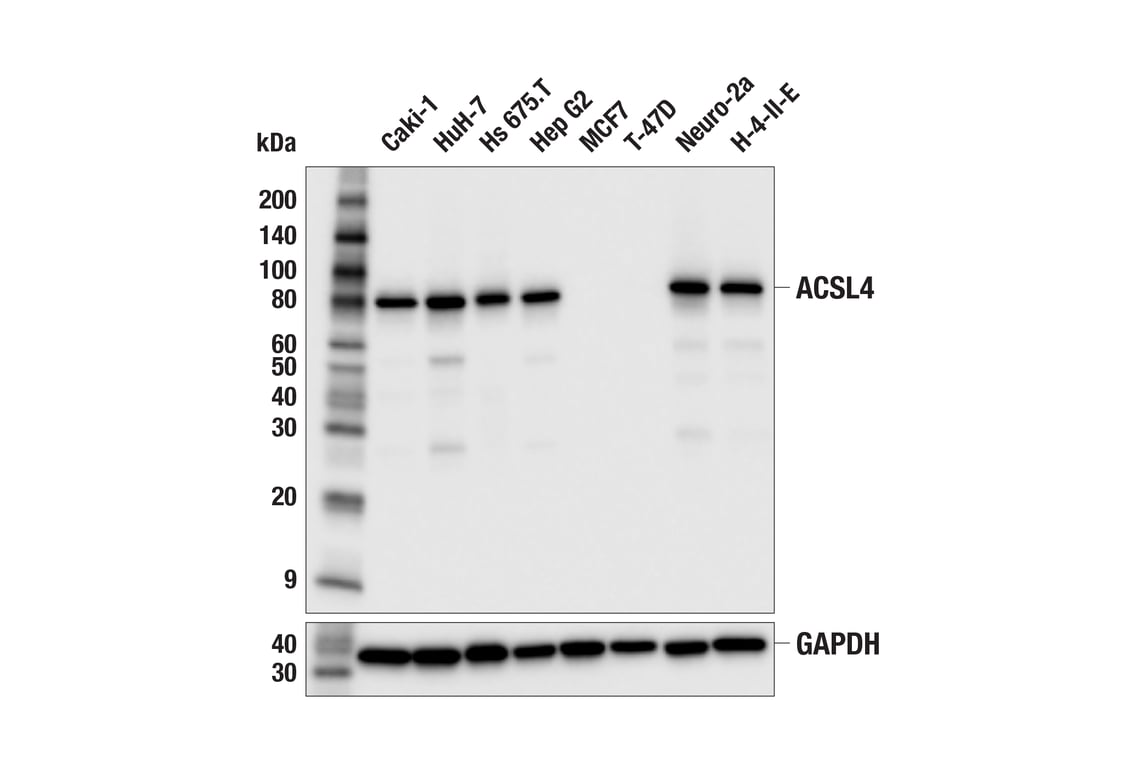
Western blot analysis of extracts from various cell lines using ACSL4 (F6T3Z) Rabbit mAb (upper) or GAPDH (D16H11) XP® Rabbit mAb #5174 (lower). Low expression of ACSL4 protein in MCF7 and T-47D cells is consistent with the predicted expression pattern.
Western Blotting Image 1: ACSL4 (F6T3Z) Rabbit Monoclonal Antibody
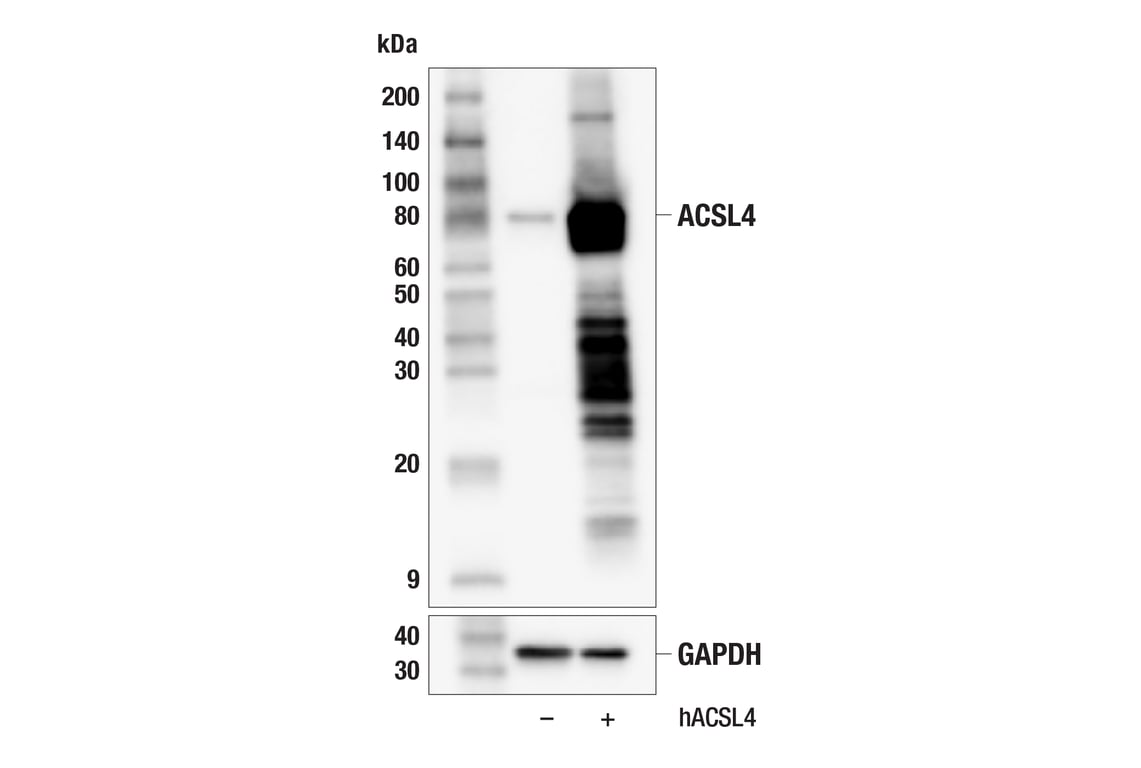
Western blot analysis of extracts from 293T cells, mock transfected (-) or transfected with a construct expressing full-length human ACSL4 protein (hACSL4; +), using ACSL4 (F6T3Z) Rabbit mAb (upper) or GAPDH (D16H11) XP® Rabbit mAb #5174 (lower).
Western Blotting Image 2: ACSL4 (F6T3Z) Rabbit Monoclonal Antibody
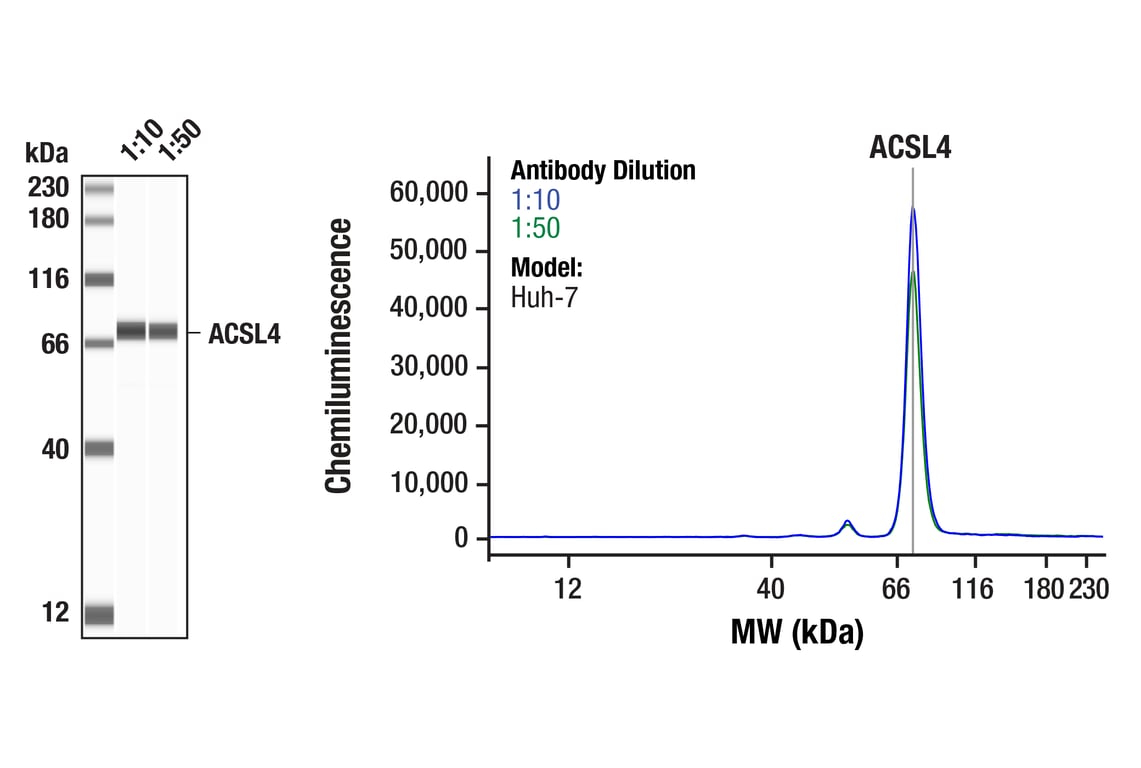
Simple Western™️ analysis of lysates (0.05mg/mL) from Huh-7 cells using ACSL4 (F6T3Z) Rabbit mAb #38493. The virtual lane view (left) shows the target band (as indicated) at 1:10 and 1:50 dilutions of primary antibody. The corresponding electropherogram view (right) plots chemiluminescence by molecular weight along the capillary at 1:10 (blue line) and 1:50 (green line) dilutions of primary antibody. This experiment was performed under reducing conditions on the Jess™️ Simple Western instrument from ProteinSimple, a BioTechne brand, using the 12 – 230 kDa separation module.
Western Blotting Image 1: ACSL4 (F6T3Z) Rabbit Monoclonal Antibody
Orders: 877-616-CELL (2355) [email protected] Support: 877-678-TECH (8324) [email protected] Web: cellsignal.com
For Research Use Only. Not for Use in Diagnostic Procedures.

Revision 4

Cell Signaling Technology Logo
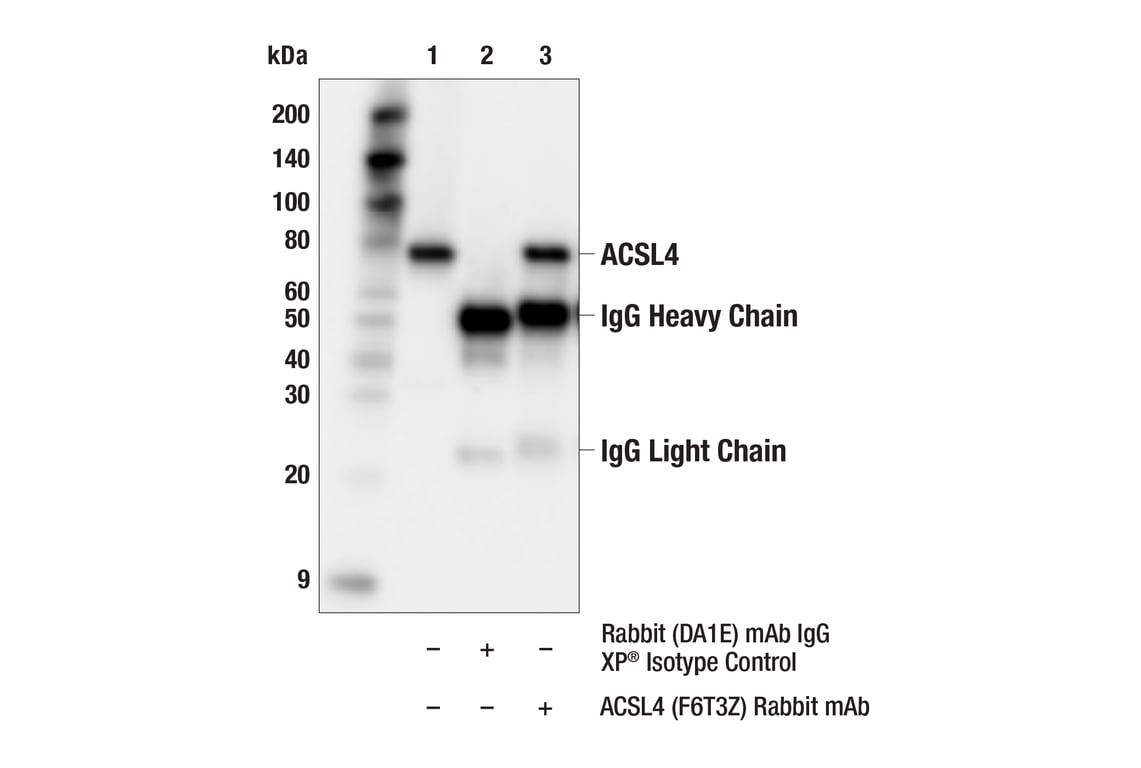
Immunoprecipitation of ACSL4 protein from HuH-7 cell extracts. Lane 1 is 10% input, lane 2 is Rabbit (DA1E) mAb IgG XP® Isotype Control #3900, and lane 3 is ACSL4 (F6T3Z) Rabbit mAb. Western blot analysis was performed using ACSL4 (F6T3Z) Rabbit mAb. Anti-rabbit IgG, HRP-linked Antibody #7074 was used as a secondary antibody.
Immunoprecipitation Image 1: ACSL4 (F6T3Z) Rabbit Monoclonal Antibody
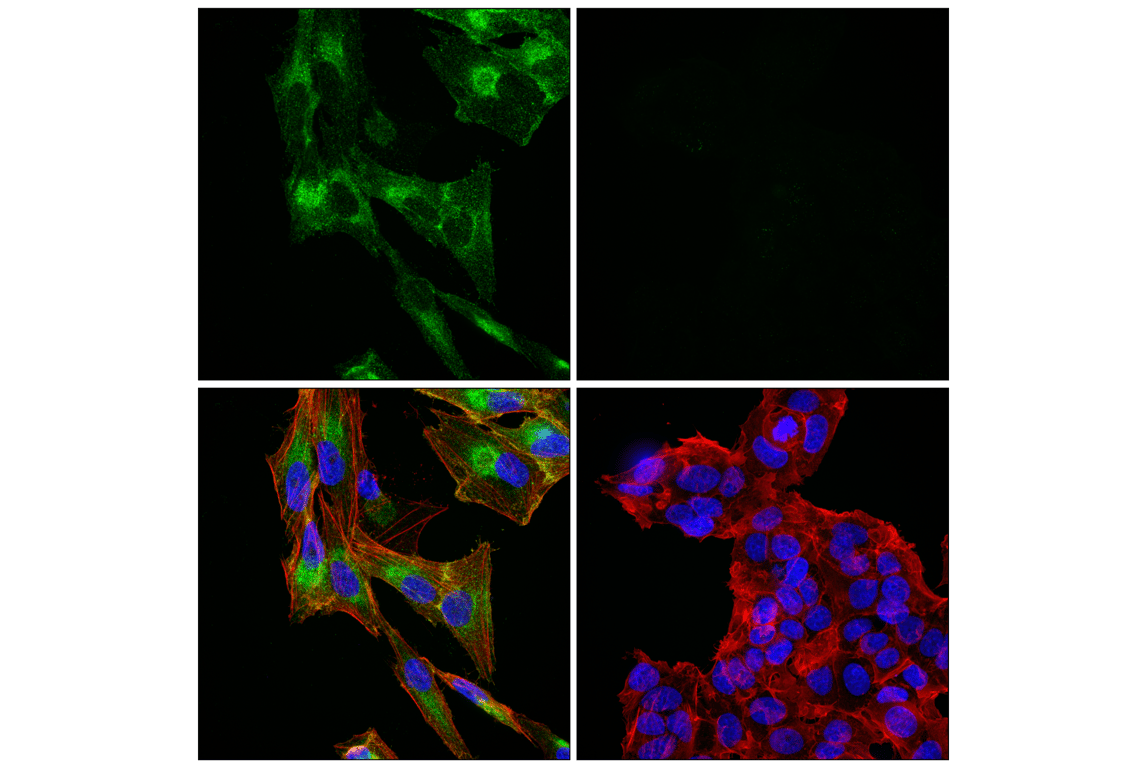
Confocal immunofluorescent analysis of Caki-1 cells (left, positive) and MCF7 cells (right, negative) using ACSL4 (F6T3Z) Rabbit mAb (green), DyLight 554 Phalloidin #13054 (red), and DAPI #4083 (blue).
Immunofluorescence Image 1: ACSL4 (F6T3Z) Rabbit Monoclonal Antibody
Orders: 877-616-CELL (2355) [email protected] Support: 877-678-TECH (8324) [email protected] Web: cellsignal.com
For Research Use Only. Not for Use in Diagnostic Procedures.