Revision 1

#70167

Store at -20C

CST Logo
Orders:

877-616-CELL (2355)

[email protected]

Support:

877-678-TECH (8324)

3 Trask Lane | Danvers | Massachusetts | 01923 | USA

For Research Use Only. Not for Use in Diagnostic Procedures.

Applications:
W, IP, IF-F, IF-IC

Reactivity:
M

Sensitivity:
Endogenous

MW (kDa):
31

Source/Isotype:
Rabbit IgG

UniProt ID:
#P04441

Entrez-Gene Id:
16149

Product Usage Information

Application Dilution
Western Blotting 1:1000
Immunoprecipitation 1:50
Immunofluorescence (Frozen) 1:400 - 1:800
Immunofluorescence (Immunocytochemistry) 1:800 - 1:1600

Storage

Supplied in 10 mM sodium HEPES (pH 7.5), 150 mM NaCl, 100 µg/mL BSA, 50% glycerol, and less than 0.02% sodium azide. Store at –20°C. Do not aliquot the antibody.

Specificity/Sensitivity

CD74 (F6K1S) Rabbit Monoclonal Antibody recognizes endogenous levels of total CD74 protein. This antibody detects multiple bands that are consistent with multimerization of CD74.

Source / Purification

Monoclonal antibody is produced by immunizing animals with a synthetic peptide corresponding to residues surrounding Gln272 of mouse CD74 protein.

Background

CD74, which is also known as the MHC Class II-associated invariant chain (Ii), is a type II transmembrane glycoprotein that plays a critical role in the antigen presentation process as a chaperone of MHC Class II proteins. It is expressed at high levels on B cells and to a lesser extent on numerous antigen presenting cell (APC) types including dendritic cells, Langerhans cells, monocytes, and macrophages as well as non-traditional APCs such as epithelial cells (1,2). CD74 was initially identified for its ability to regulate the folding and intracellular trafficking of newly synthesized MHC Class II molecules. Following expression, CD74 self-assembles as a trimer that serves as a scaffold for the assembly of MHC Class II molecules. Through this interaction, CD74 blocks the peptide binding cleft of MHC Class II molecules and prevents their premature association with endogenous polypeptides (3). Binding to CD74 also facilitates the translocation of MHC Class II molecules from the endoplasmic reticulum to the endocytic compartments during antigen presentation (4). In addition to its role as an MHC Class II chaperone, CD74 is also the receptor for macrophage migration-inhibitory factor (MIF). Binding to CD74 and its co-receptor, CD44, has been shown to induce the activation of the NFkB and ERK pathways to promote cell proliferation and survival signals (5,6). Recent studies have identified CXCR2 and CXCR4 as co-receptors for CD74 where MIF binding to CD74 complexes contributes to MIF-mediated monocyte chemotaxis and the induction of Akt signaling, respectively (7,8). Increased CD74 surface expression has been reported under inflammatory conditions and in certain types of cancer cells implying a potential role in tumorigenesis (9).

Species Reactivity

Species reactivity is determined by testing in at least one approved application (e.g., western blot).

Western Blot Buffer

IMPORTANT: For western blots, incubate membrane with diluted primary antibody in 5% w/v BSA, 1X TBS, 0.1% Tween® 20 at 4°C with gentle shaking, overnight.

Applications Key

W: Western Blotting IP: Immunoprecipitation IF-F: Immunofluorescence (Frozen) IF-IC: Immunofluorescence (Immunocytochemistry)

Cross-Reactivity Key

M: Mouse

Trademarks and Patents

Cell Signaling Technology is a trademark of Cell Signaling Technology, Inc.

All other trademarks are the property of their respective owners. Visit cellsignal.com/trademarks for more information.

使用に関する制限

使用に関する制限

法的な権限を与えられたCSTの担当者が署名した書面によって別途明示的に合意された場合を除き、CST、その関連会社または代理店が提供する製品には以下の条件が適用されます。お客様が定める条件でここに定められた条件に含まれるものを超えるもの、または、ここに定められた条件と異なるものは、法的な権限を与えられたCSTの担当者が別途書面にて受諾した場合を除き、拒絶され、いかなる効力も効果も有しません。

研究専用 (For Research Use Only) またはこれに類似する表示がされた製品は、 いかなる目的についても FDA または外国もしくは国内のその他の規制機関により承認、認可または許可を受けていません。 お客様は製品を診断もしくは治療目的で使用してはならず、また、製品に表示された内容に違反する方法で使用してはなりません。 CST が販売または使用許諾する製品は、エンドユーザーであるお客様に対し、使途を研究および開発のみに限定して提供されるものです。 診断、予防もしくは治療目的で製品を使用することまたは製品を再販売 (単独であるか他の製品等の一部であるかを問いません) もしくはその他の商業的利用の目的で購入することについては、CST から別途許諾を得る必要があります。 お客様は以下の事項を遵守しなければなりません。(a) CST の製品 (単独であるか他の資材と一緒であるかを問いません) を販売、使用許諾、貸与、寄付もしくはその他の態様で第三者に譲渡したり使用させたりしてはなりません。また、商用の製品を製造するために CST の製品を使用してはなりません。(b) 複製、改変、リバースエンジニアリング、逆コンパイル、 分解または他の方法により製品の構造または技術を解明しようとしてはなりません。また、 CST の製品またはサービスと競合する製品またはサービスを開発する目的で CST の製品を使用してはなりません。(c) CST の製品の商標、商号、ロゴ、特許または著作権に関する通知または表示を除去したり改変したりしてはなりません。(d) CST の製品をCST 製品販売条件(CST’s Product Terms of Sale) および該当する書面のみに従って使用しなければなりません。(e) CST の製品に関連してお客様が使用する第三者の製品またはサービスに関する使用許諾条件、 サービス提供条件またはこれに類する合意事項を遵守しなければなりません。

Orders: 877-616-CELL (2355) [email protected] Support: 877-678-TECH (8324) [email protected] Web: cellsignal.com
For Research Use Only. Not for Use in Diagnostic Procedures.

Revision 1

Cell Signaling Technology Logo
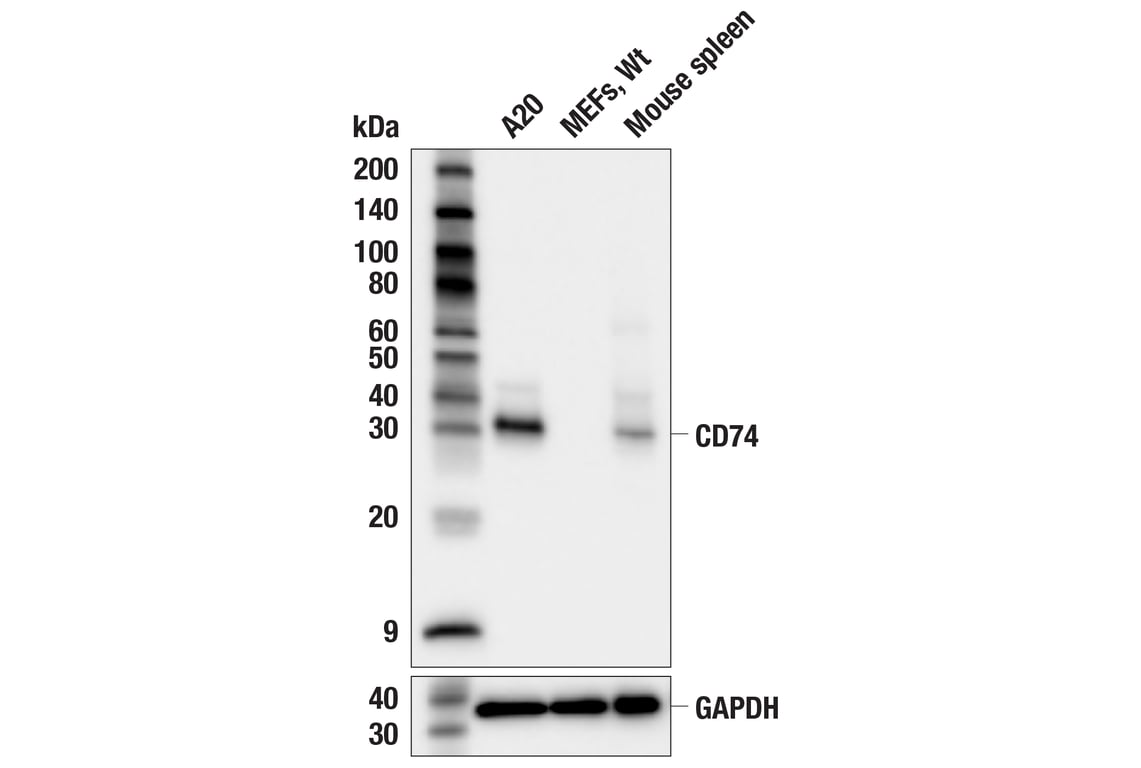
Western blot analysis of extracts from A20 and MEFs, Wt cells, and mouse spleen tissue using CD74 (F6K1S) Rabbit mAb (upper) or GAPDH (D16H11) XP® Rabbit mAb #5174 (lower). Negative expression of CD74 protein in MEFs, Wt cells is consistent with the predicted expression pattern.
Western Blotting Image 1: CD74 (F6K1S) Rabbit Monoclonal Antibody
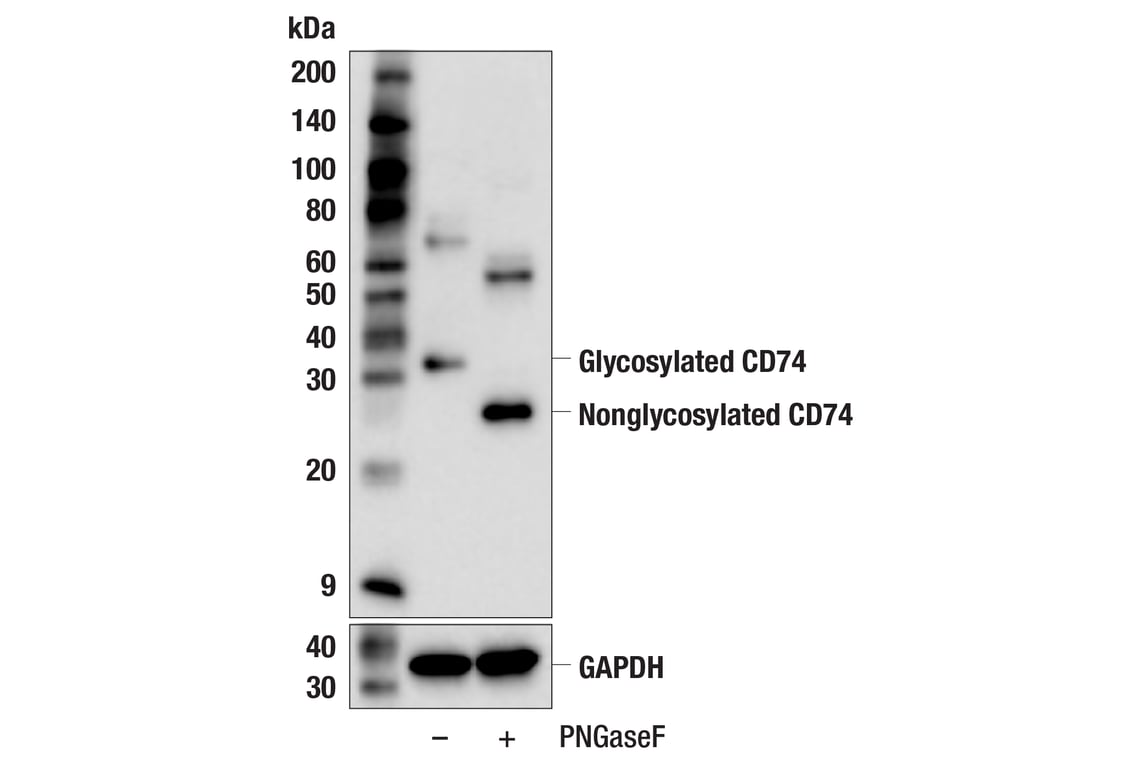
Western blot analysis of extracts from mouse spleen tissue, untreated (-) or treated with peptide N-glycosidase F (PNGase F; +), using CD74 (F6K1S) Rabbit mAb (upper) or GAPDH (D16H11) XP® Rabbit mAb #5174 (lower).
Western Blotting Image 2: CD74 (F6K1S) Rabbit Monoclonal Antibody
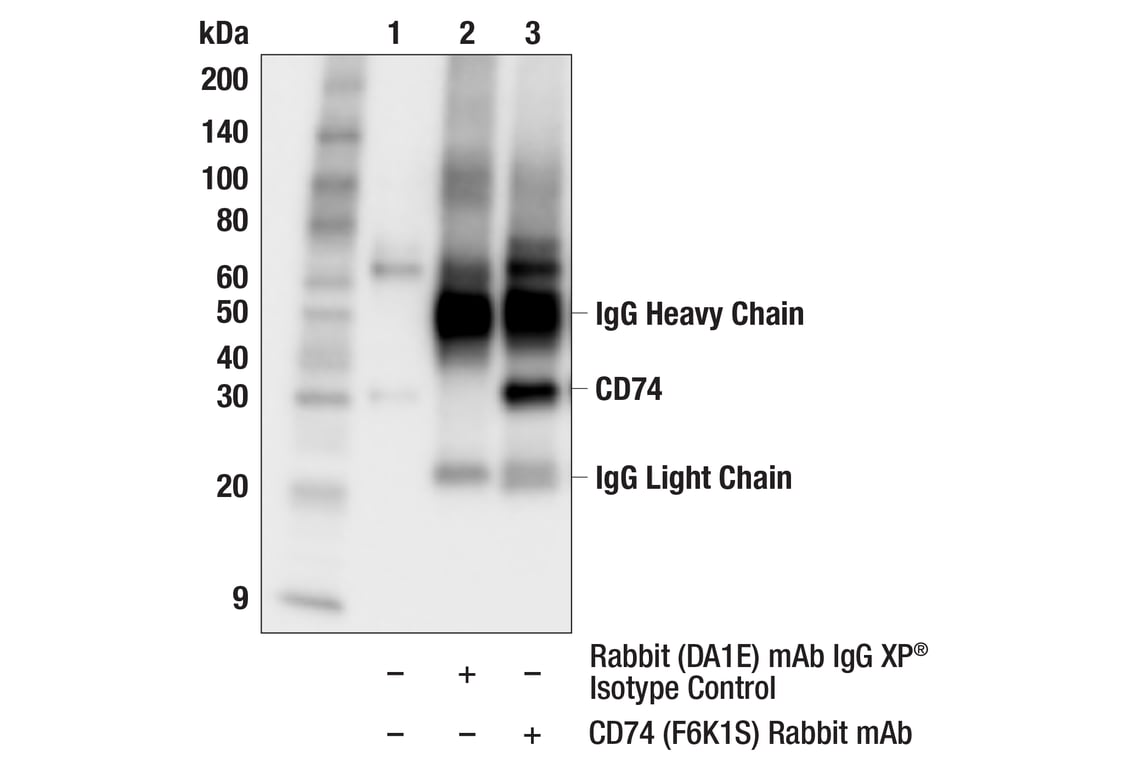
Immunoprecipitation of CD74 protein from mouse spleen tissue extracts. Lane 1 is 10% input, lane 2 is Rabbit (DA1E) mAb IgG XP® Isotype Control #3900, and lane 3 is CD74 (F6K1S) Rabbit mAb. Western blot analysis was performed using CD74 (F6K1S) Rabbit mAb. Anti-rabbit IgG, HRP-linked Antibody #7074 was used as a secondary antibody.
Immunoprecipitation Image 1: CD74 (F6K1S) Rabbit Monoclonal Antibody
Orders: 877-616-CELL (2355) [email protected] Support: 877-678-TECH (8324) [email protected] Web: cellsignal.com
For Research Use Only. Not for Use in Diagnostic Procedures.

Revision 1

Cell Signaling Technology Logo
Confocal immunofluorescent analysis of fixed frozen subiculum from an amyloid mouse model of Alzheimer's disease using CD74 (F6K1S) Rabbit mAb (green). Free secondary binding sites were then blocked with Rabbit (DA1E) mAb IgG XP® Isotype Control #3900 prior to co-labeling with β-Amyloid (D54D2) XP® Rabbit mAb (Alexa Fluor® 594 Conjugate) #35363 (red), ASC/TMS1 (D2W8U) Rabbit mAb (Alexa Fluor® 647 Conjugate) #23640 (white), and ProLong Gold Antifade Reagent with DAPI #8961 (blue).
Immunofluorescence Image 1: CD74 (F6K1S) Rabbit Monoclonal Antibody
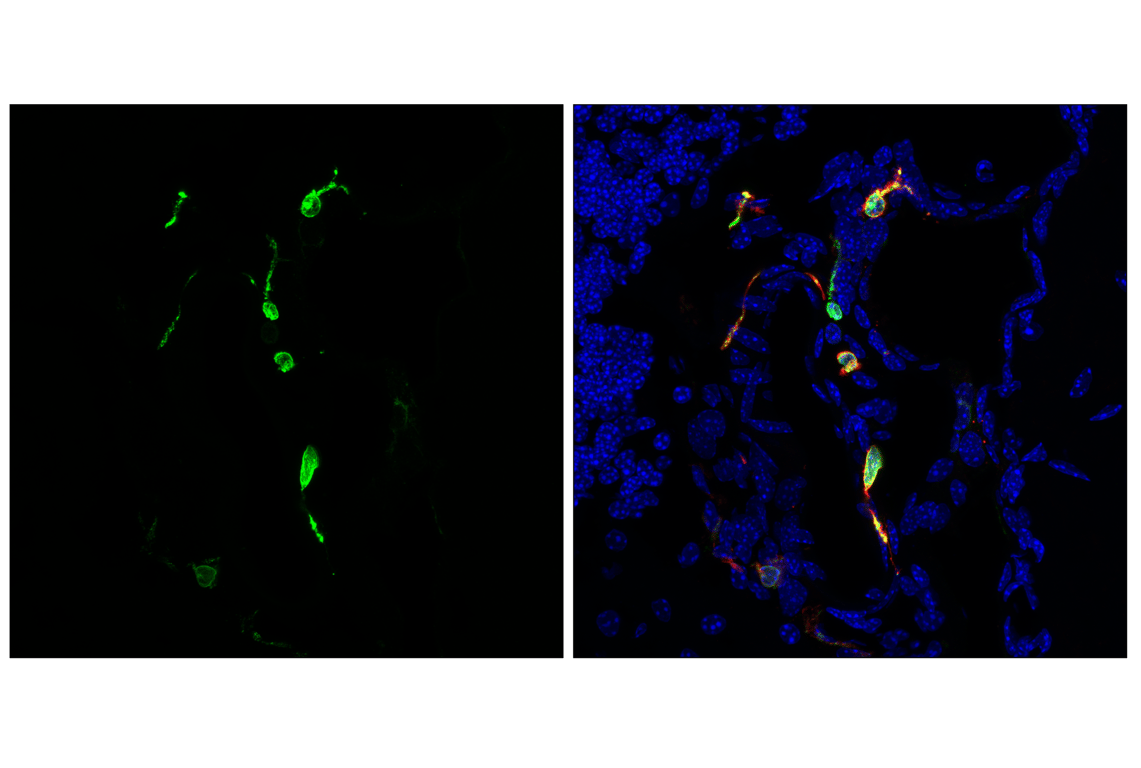
Confocal immunofluorescent analysis of barrier associated macrophages from fixed frozen mouse brain using CD74 (F6K1S) Rabbit mAb (green), MHC Class II (I-A/I-E) (M5/114.15.2) Rat mAb #86285 (red), and ProLong Gold Antifade Reagent with DAPI #8961 (blue).
Immunofluorescence Image 2: CD74 (F6K1S) Rabbit Monoclonal Antibody
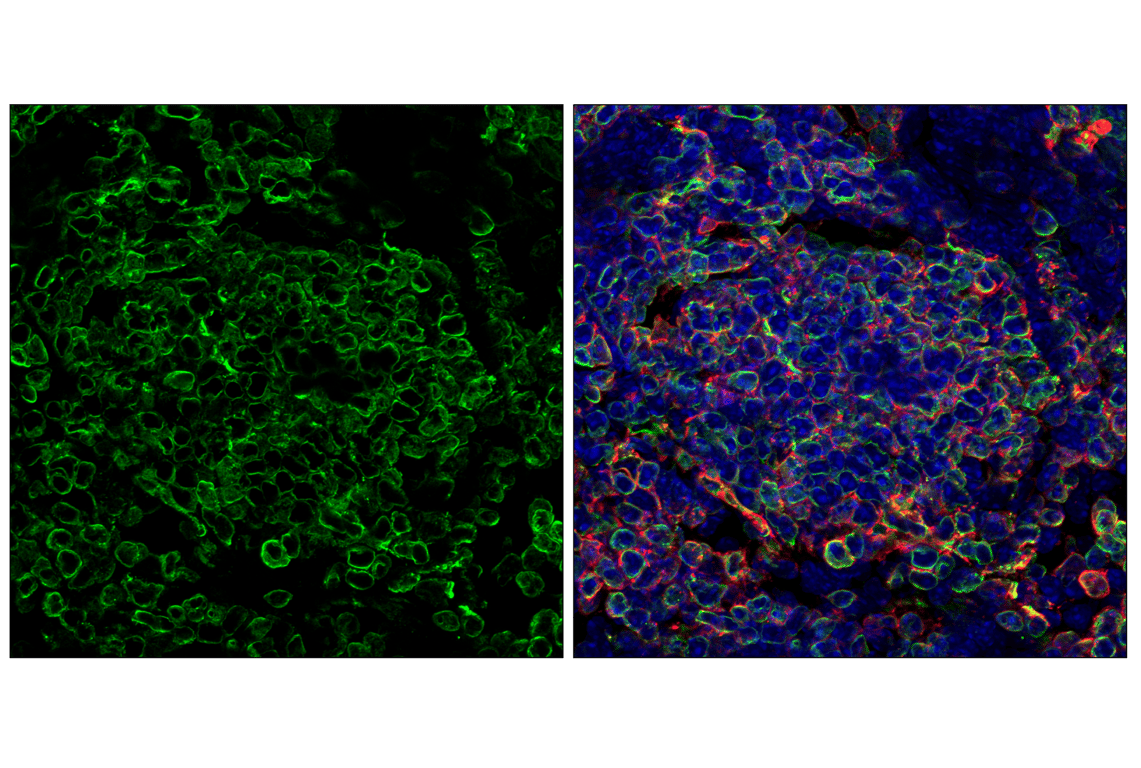
Confocal immunofluorescent analysis of fixed frozen mouse spleen using CD74 (F6K1S) Rabbit mAb (green) and co-labeled with MHC Class II (I-A/I-E) (M5/114.15.2) Rat mAb #86285 (red) and ProLong Gold Antifade Reagent with DAPI #8961 (blue).
Immunofluorescence Image 3: CD74 (F6K1S) Rabbit Monoclonal Antibody
Orders: 877-616-CELL (2355) [email protected] Support: 877-678-TECH (8324) [email protected] Web: cellsignal.com
For Research Use Only. Not for Use in Diagnostic Procedures.

Revision 1

Cell Signaling Technology Logo
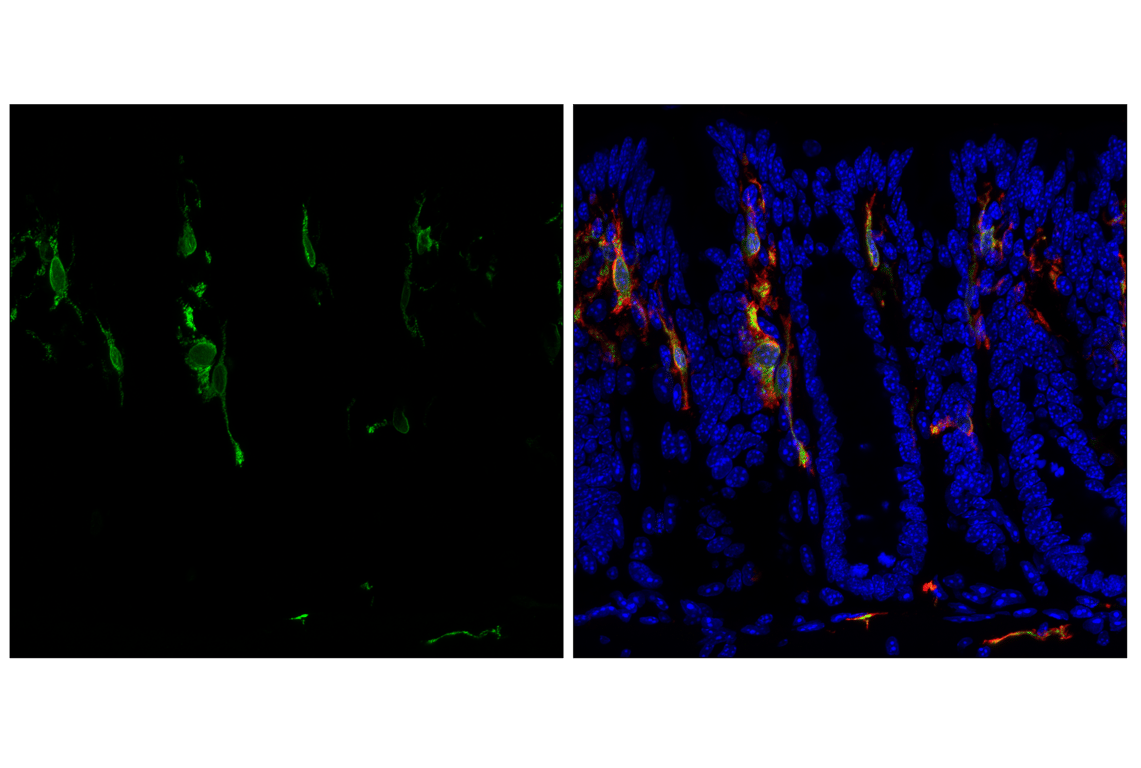
Confocal immunofluorescent analysis of fixed frozen mouse colon using CD74 (F6K1S) Rabbit mAb (green), MHC Class II (I-A/I-E) (M5/114.15.2) Rat mAb #86285 (red), and ProLong Gold Antifade Reagent with DAPI #8961 (blue).
Immunofluorescence Image 4: CD74 (F6K1S) Rabbit Monoclonal Antibody
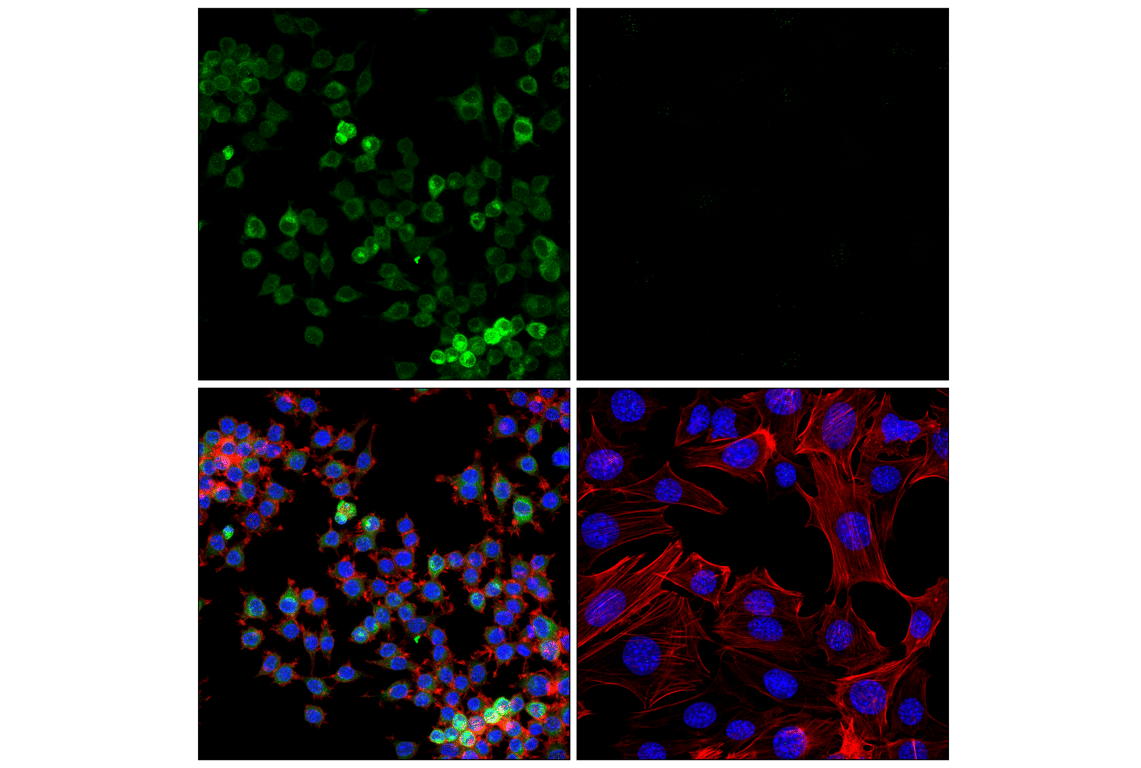
Confocal immunofluorescent analysis of RAW 264.7 cells (left, positive) and MEF cells (right, negative) using CD74 (F6K1S) Rabbit mAb (green), DyLight 554 Phalloidin #13054 (red), and DAPI #4083 (blue).
Immunofluorescence Image 1: CD74 (F6K1S) Rabbit Monoclonal Antibody
Orders: 877-616-CELL (2355) [email protected] Support: 877-678-TECH (8324) [email protected] Web: cellsignal.com
For Research Use Only. Not for Use in Diagnostic Procedures.